


News Swiss Paraplegic Research

Latest News

In this section, you will find the latest news about Swiss Paraplegic Research. Here, we report on new and ongoing studies, notable publications and events, as well as grants and awards received by Swiss Paraplegic Research and its staff.

Swiss Paraplegic Research and the University of Lucerne have developed the online course "ICF-StARS", which is freely available (at no cost for participating): https://www.openlearnity.org/courses/StARS/

Course objective:

The course provides the basics for understanding functioning and for the reporting of functioning information in a standardized manner by using the International Classification of Functioning, Disability and Health (ICF).

Target group:

The course is aimed at interested people who work with functioning data (assessment and reporting), including healthcare professionals, researchers, students, quality managers and other professionals in the health system.

When: September 21st – October 25th, 2026

Mode: Self-study with flexible attendance online

Workload: 25 hours in total (equivalent to 1 ECTS)

Language: English

The second InSCI survey was conducted between 2022 and 2024 in 31 countries across all WHO regions, including Switzerland through SwiSCI. The study provides valuable insights into the lives of people with spinal cord injury around the world. In April 2026, the first results were published in six scientific papers in the Archives of Physical Medicine and Rehabilitation. A detailed summary of the findings in German is available in the current issue of the magazine Paracontact.
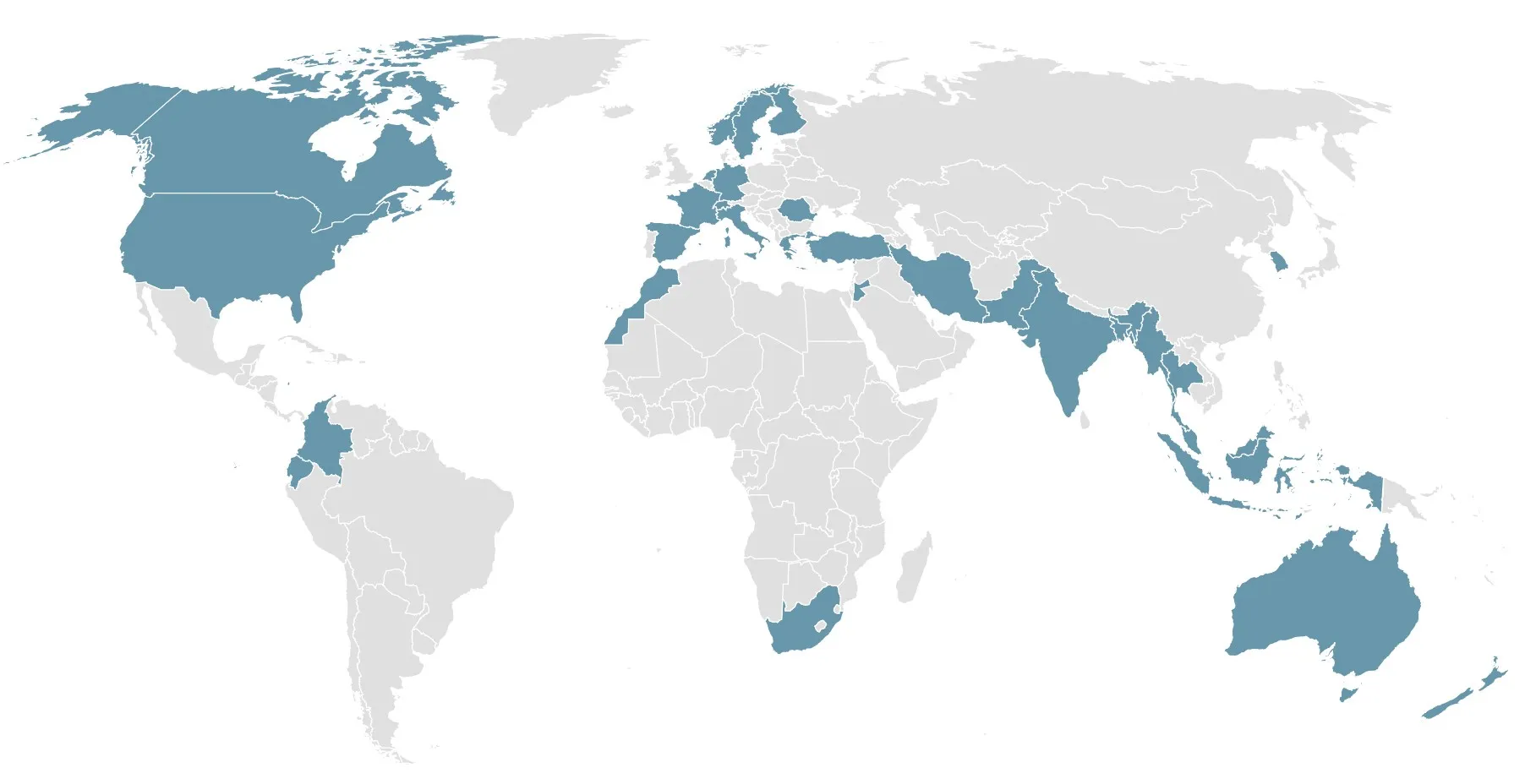
Die Weltkarte zeigt blau eingefärbt die 32 Länder, die an der aktuellen InSCI-Studie 2022-2024 teilgenommen haben.

Participating countries in the InSCI study (shown in blue)

Data from more than 15,000 participants show:

  • Causes of spinal cord injury worldwide: The leading causes are road traffic collisions (35%), falls from more than one metre (18%), and work-related accidents (14%). However, there are considerable differences between countries.
  • Most common health problems: Pain (82%), depressive symptoms (79%), muscle spasms (76%), and bowel problems (71%) are the most frequently reported health issues among people with spinal cord injury.
  • Changes over time: An increase in health problems over the years was observed only in people with traumatic spinal cord injury, but not in those with non-traumatic spinal cord injury.
  • Use of healthcare services: General practitioners are the most frequently consulted healthcare professionals (59%), followed by inpatient services (49%) and physiotherapy (44%).
  • Major differences in access to care: The proportion of people reporting unmet healthcare needs ranges from around 8% in Switzerland to approximately 60% in Iran and Morocco.
  • Health system performance: Switzerland ranks fifth internationally. Only Norway, Andorra, the Netherlands, and Spain achieved higher scores.
  • Low employment rates: On average, only about one third of people with spinal cord injury are employed worldwide. Rates are substantially higher in high-income countries, with Switzerland ranking first globally at 60%.

The findings demonstrate the strong influence of health and social systems on the lives of people with spinal cord injury. Several countries are already using InSCI results to inform national strategies aimed at improving rehabilitation and participation.

InSCI is one of the largest multinational studies on the lived experience of people with spinal cord injury. The study is coordinated by Swiss Paraplegic Research. Further information: https://insci.network/

We warmly congratulate our colleague Ursina Arnet on co-editing the new book ‘The Routledge Handbook of Disability Sport Science’.

The handbook offers the first comprehensive review of current topics within disability sports science. Covering six subject areas – physiology, biomechanics, technology, nutrition, psychology, and physical preparation, health and classification – the book brings together knowledge from sports science, rehabilitation and medicine.

The handbook was written by leading international experts from academia and professional practice. It is aimed at researchers, students and practitioners in disability sport.

More information about the book: https://www.routledge.com/The-Routledge-Handbook-of-Disability-Sport-Science/Griggs-Arnet-vanderSlikke-Flueck/p/book/9781032502656

Yesterday, a milestone of our work was set in Bern: the launch of the National Spinal Cord Injury Strategy 2025–2033.

The strategy is more than a document – it is a guide and orientation: it highlights where Switzerland already has strong structures and where gaps remain, and it proposes nine areas of action with 32 concrete measures to improve the situation over the next eight years – for example in lifelong care or in vocational and social integration.

The strategy helps Switzerland fulfil international commitments such as the UN Convention on the Rights of Persons with Disabilities and achieve high standards for inclusion and rehabilitation. “The strategy is more than a health plan – it is a societal project. Only when politics, professionals and those affected work together can we achieve true inclusion,” says Heidi Hanselmann, President of the Swiss Paraplegic Foundation.

The development of the strategy has been participatory from the very beginning. People with spinal cord injury, relatives, professionals from healthcare, social services, science, politics and advocacy groups contributed their perspectives. The basis of the strategy is scientific data that systematically identify gaps in care and fields of action.

The National Strategy is a true joint project developed by the Association of Swiss Paraplegic Centres (REHAB Basel, University Hospital Balgrist Zürich, CRR Sion, SPC Nottwil), Swiss Paraplegic Foundation, Swiss Paraplegic Association, and Swiss Paraplegic Research. The process was supported by the Federal Office of Public Health (FOPH) with and the Conference of Cantonal Health Directors (GDK), ensuring that the strategy is anchored at the national level.

The launch of the strategy is just the first step. Now it is time for all stakeholders to take responsibility – and together we have to take the next steps towards concrete change.

More about the strategy: National Spinal Cord Injury Strategy 2025–2033 - paraplegikerzentren.ch

(Photos: Nadja Schärli)
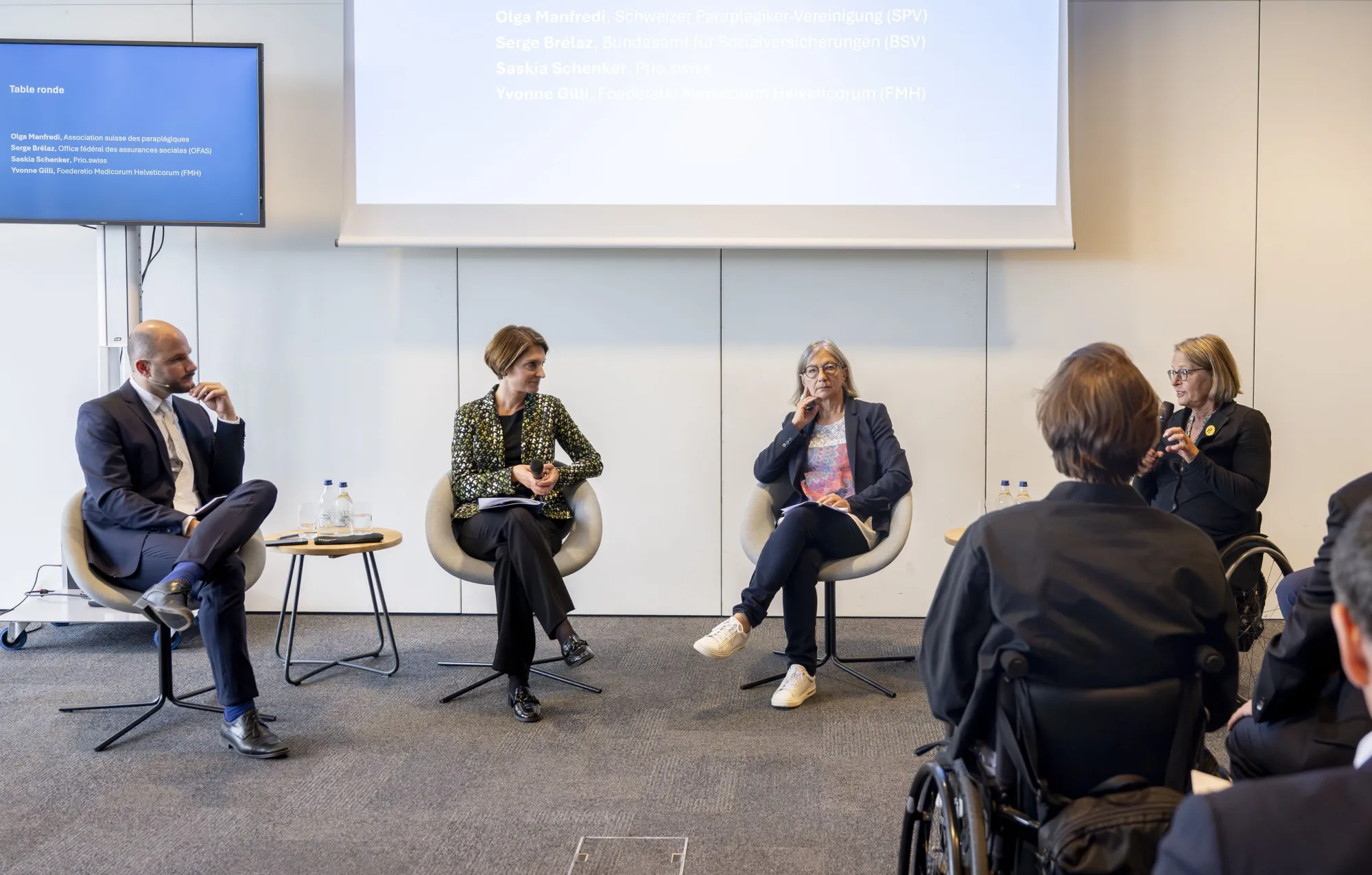
Podiumsdiskussion zur nationalen Strategie Querschnittlähmung.

Panel discussion with representatives of the federal government, service providers, insurers, and people with spinal cord injury

Heinz Frei

Heinz Frei with the National Spinal Cord Injury Strategy

On 1 October 2025, Marc Bolliger will take over as Director of Swiss Paraplegic Research (SPR). He succeeds Gerold Stucki, who has led SPR since 2005.

Born in 1973, Marc Bolliger studied sports and movement sciences at the University of Basel and received his PhD in 2005 from Humboldt University in Berlin. He then conducted postdoctoral research at the University of Zurich and ETH Zurich in the field of neurorehabilitation and rehabilitation robotics.

Since 2010, Marc Bolliger has headed the research department of the Spinal Cord Injury Center at Balgrist University Hospital and, in 2017, he obtained his habilitation in the field of paraplegiology at the Faculty of Medicine of the University of Zurich. In his research, he places particular emphasis on interdisciplinary collaboration. His primary areas of research include rehabilitation technologies, the prediction of recovery after traumatic spinal cord injury, and the development of new functional assessments.

In addition, Marc Bolliger has been appointed Professor of Health and Rehabilitation Sciences at the Faculty of Health Sciences and Medicine at the University of Lucerne. This professorship is structured as a joint position between Swiss Paraplegic Research (70%) and the University of Lucerne (30%).

We warmly welcome Marc Bolliger and look forward to working with him.

The new annual report of the Swiss Paraplegic Foundation and its subsidiaries is available online (in German only) at https://report.paraplegie.ch/2024/. There you will find stories from the year 2024, a video message and the report on Swiss Paraplegic Research.

Swiss Paraplegic Research (SPR) is once again recognized and funded by the federal government as a “research facility of national importance” in 2025-2028. This makes SPR one of the few research institutes in Switzerland to receive this special recognition for the fifth time.

The federal government and the canton of Lucerne are once again funding the SPR with CHF 1.1 million annually. The federal and cantonal governments have been supporting SPR since 2008 due to its unique research focus. SPR researches topics and issues that arise in the lives of people with spinal cord injury and thus makes an important contribution to their health, social integration and quality of life.

Carla Sabariego has been appointed Full Professor of Rehabilitation and Healthy Ageing at the University of Lucerne. This bridge professorship between the University of Lucerne and Swiss Paraplegic Research is a significant recognition of her outstanding scientific achievements.

In her research, Carla Sabariego focuses on the measurement of functioning and applies implementation research methods to promote the integration of rehabilitation services in healthcare systems.

We congratulate Carla on this success and look forward to working with her in the future!

We are pleased to announce the publication of the proceedings of the first National Academies of Sciences, Engineering, and Medicine (NASEM) workshop outside America, held at the University of Lucerne in February 2024.

Using the World Health Organization's concept of functioning, the workshop focused on healthy aging and the future of rehabilitation as a health strategy. Speakers explored the great potential of functioning-based rehabilitation to uniquely address the major health and healthcare challenges of society. Here is a recording of the workshop and the panelists' slides.

An important moment for Swiss health policy: On 15 February 2024, the 1st LIFE Forum Rehabilitation took place at the University of Lucerne. The topic was the WHO resolution “Strengthening Rehabilitation in Health Systems” and how it can be implemented in Switzerland. This question was discussed by high-level experts from education, research, clinical practice, health policy, and patients.

All information about the event (and soon the presentations) can be found at this link.

We would like to thank the organising committee and especially the staff of Swiss Paraplegic Research, Diana Pacheco Barzallo, Carla Sabariego, Urban Schwegler, Melissa Selb, and our director Gerold Stucki, for organising this first successful forum.

About the WHO resolution:
The WHO Resolution “Strengthening Rehabilitation in Health Systems”, adopted in May 2023, emphasizes the central role of rehabilitation in improving the quality of life of patients and reducing the burden on health systems. The 194 Member States adopted the resolution unanimously. A WHO resolution is not binding but provides a compass for countries to follow.

About LIFE:
The aim of the Lucerne Initiative for Functioning, Health and Well-being (LIFE) is to establish a new understanding of health as functioning in society and to embed it in the health care system. LIFE also aims to promote interdisciplinarity in the Swiss rehabilitation landscape and to strengthen cooperation between education, research, practice, and politics.

The World Economic Forum (WEF) dedicates an article and a podcast to Swiss Paraplegic Research's paper on the ‘human functioning revolution’.

The concept of ‘human functioning’ integrates peoples’ biological health but also their lived experience of health. The International Classification of Functioning, Disability and Health (ICF) is based on the concept. Although the concept and the ICF as framework for assessing functioning were conceived more than 20 years ago, they have not yet become a standard part of health practice.

The authors argue that the human functioning concept could revolutionize health systems and engender a new interdisciplinary field benefitting research, healthcare, and policy. They advocate a paradigm shift implementing functioning as the third indicator of health alongside mortality and morbidity. The fact that the WEF is including the topic on its agenda is an important step in promoting the recognition and application of functioning.

Congratulations to the authors, our group leaders Jerome Bickenbach, Sara Rubinelli and our director Gerold Stucki!

Links:

On 1 July 2020, 17 students from 11 countries have started their research internship at SPF in Nottwil. For the next nine months, they will be working on various research projects as part of the Master program in Health Sciences at the University of Lucerne. The students will deepen their understanding on spinal cord injury and contribute to research areas in rehabilitation, epidemiology, psychology, neurobiology, health communication, clinical quality management, and health systems.

For the eighth consecutive year, Nottwil opens its doors to master students, who are interested in research on spinal cord injury.

For additional information on the Master in Health Sciences:
https://www.unilu.ch/en/study/study-programmes/masters-degrees/health-sciences-and-medicine/master-in-health-sciences/

For information on research projects conducted by students in the past years: https://www.paraplegie.ch/spf/en/academic-career/career/master-program/

With the Doctor honoris causa the Department of Health Sciences and Medicine at the University of Lucerne honors on 5 November 2020 the outstanding contribution Prof. Bickenbach has made to the development of the Department and ensuring its international recognition. Rooted in philosophy and law Prof. Bickenbach has advanced the conceptual foundation of the health, functioning and rehabilitation sciences. Most importantly, he is the scientific brain behind WHO’s International Classification of Functioning, Disability, and Health (ICF) launched in 2001. Understanding the need to bridge research and practice, he has spearheaded the “learning health system” to strengthen the response of health systems to the health needs of populations, including those living with spinal cord injury. He has also inspired generations of health scientists worldwide. For many, he has become a mentor and friend.

Werden Sie jetzt Mitglied und erhalten Sie im Ernstfall 250 000 Franken.

Mitglied werden

Spenden Sie jetzt und unterstützen Sie unsere Projekte zugunsten von Querschnittgelähmten.

Spenden
Was this page helpful?