Person-centered Healthcare and Health Communication

Our vision:
A rehabilitation and care system that is person-centred, learning-oriented, and responsive, where high-quality communication, shared decision-making, and effective use of evidence support the autonomy, participation, and quality of life of people with spinal cord injury across the entire continuum of care, from initial rehabilitation to life in the community.

Our mission:
We aim to generate and translate evidence that strengthens person-centred care and communication in rehabilitation and long-term care. Our work focuses on the lived experiences, decision-making processes, and communication practices of people with spinal cord injury, their relatives, and healthcare professionals.

Our interdisciplinary and application-oriented research programme combines qualitative, quantitative, and mixed-methods approaches, with a strong qualitative core. Conceptually, our work is grounded in person-centred healthcare, health communication, and the biopsychosocial model of functioning, disability, and health (ICF). Our goal is to produce knowledge that can be meaningfully integrated into clinical practice, technology development, education, and health policy.

In addition to leading its own research projects, the group serves as a reference point for qualitative research within Swiss Paraplegic Research, providing methodological expertise and support across projects, from study design and data collection to analysis, interpretation, and knowledge translation.
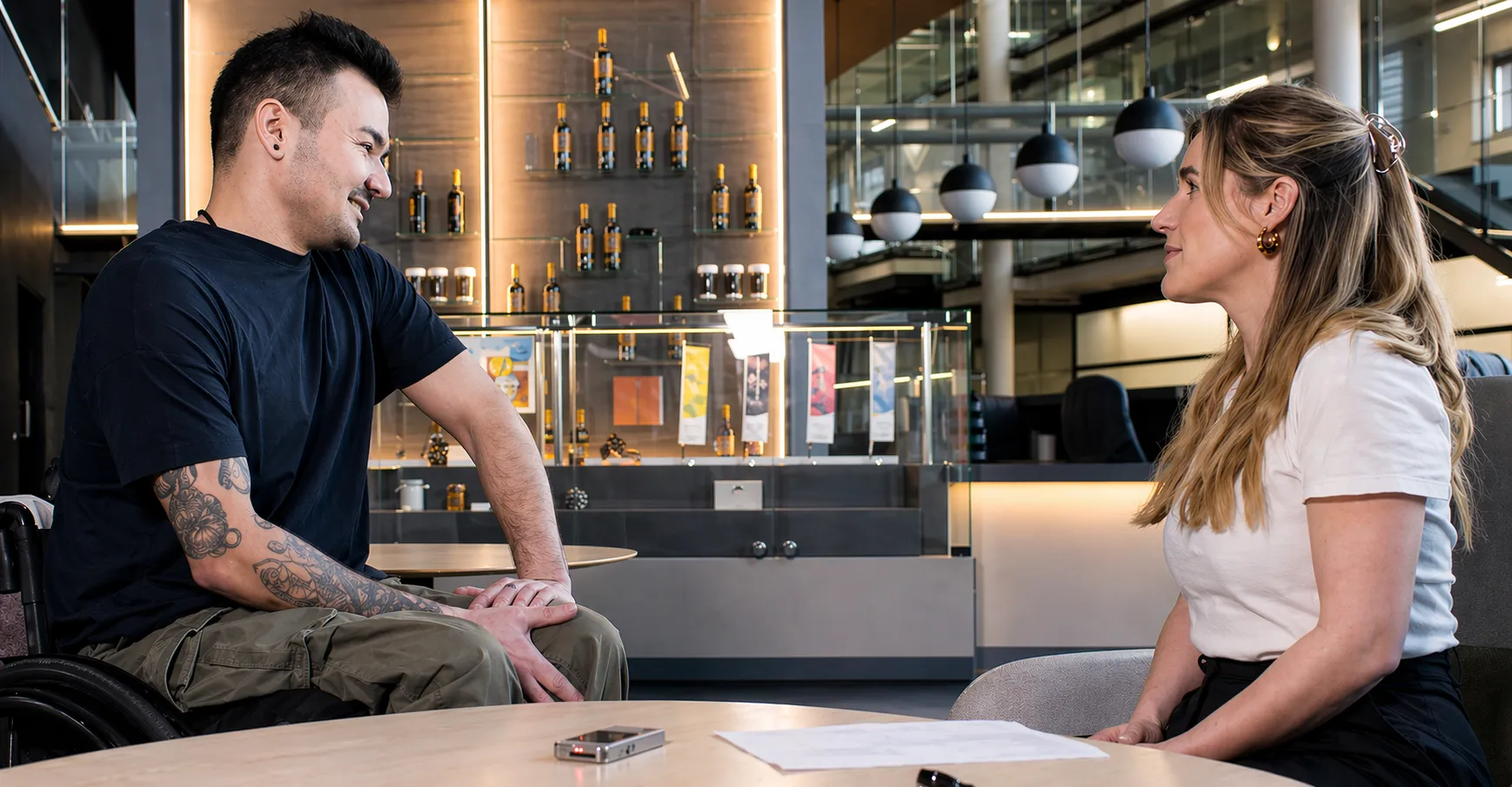
Researcher talking to a man in a wheelchair

Contact

PD Dr. Nicola Diviani

Research Group Leadernicola.diviani@paraplegie.ch

Research Areas

One of the core research areas of our group is the study of self-management as a dynamic, context-dependent, and long-term process. Rather than treating self-management as a predefined set of behaviours, we examine how people with spinal cord injury and their relatives learn to deal with health-related demands, make decisions, and integrate self-management into everyday life over time.

A flagship project in this area is “The Existential Dimension of Health Self-Management” (2021–2025), funded by the Swiss National Science Foundation. This longitudinal qualitative study explores how people newly diagnosed with spinal cord injury begin to engage with self-management during and after initial rehabilitation, paying particular attention to uncertainty, emotional adjustment, and meaning-making. By including patients, relatives, and healthcare professionals, the project has generated new insights into early decision-making processes that are often overlooked in conventional self-management models.

This work is complemented by our involvement in integrating self-management measures into the Swiss Spinal Cord Injury Cohort Study (SwiSCI), enabling population-level analyses of self-management practices, digital health use, and long-term adaptation to spinal cord injury. Further projects focus on key transitions, such as moving from inpatient rehabilitation to community life, including a mixed-methods study on psychological adaptation and vocational integration (2025–2028). This study is co-led with the Work and Integration group and funded by the Swiss Paraplegic Foundation Research Committee.

More recent research directions extend this line of work to caregiver roles and system-level questions. We conduct studies on caregiver motivation and a project on the economic value of self-management in spinal cord injury, combining qualitative research, cohort data, and health economic modelling.

Communication is a central mechanism through which person-centred care is realised. In this research area, we examine how communication between patients, relatives, and healthcare professionals – as well as within and across interprofessional teams – shapes understanding, coordination, and decision-making along the rehabilitation pathway.

A major ongoing project is “Patient–Provider and Interprofessional Communication in SCI Rehabilitation” (2023–2027). Using a mixed-methods design, the project combines qualitative interviews with patients and relatives and quantitative surveys among healthcare professionals in specialised rehabilitation clinics across Switzerland. The aim is to identify communicative practices that support, but also constrain, shared decision-making, continuity of care, and interprofessional collaboration.

In parallel, we contribute our expertise to practice-oriented communication initiatives within clinical settings, including advisory work for communication expert groups. Beyond spinal cord injury, we are also involved in communication research in other care contexts, such as a hospital-wide project on communication in paediatric care at Lucerne Children’s Hospital (2024–2026).

Across projects, communication is conceptualised not merely as an individual skill, but as a relational, organisational, and institutional practice that directly affects care quality and patient experience.

Technological innovations have great potential to support rehabilitation and independence, but only if they align with the realities of people’s everyday lives. In this research area, we study how assistive technologies and digital tools are experienced, adopted, and integrated by people with spinal cord injury.

An example is a qualitative study on the use of innovative tricycles, funded by the Swiss Paraplegic Foundation Research Committee (2022–2024)., It examined perceived barriers and facilitators to use the tricycles and translated user experiences into concrete recommendations for design improvement and implementation.

Currently, we are involved in the multidisciplinary innovation project “Better Quality of Life with Live4all” (2025–2027), funded by Innosuisse. In this project, we lead the user-experience and usability research on an intelligent wheelchair cushion designed to prevent pressure injuries. Through in-depth qualitative studies, user perspectives are systematically integrated into product development and implementation strategies.

Additional work in this area includes the development and validation of short, practice-oriented assessment tools, such as nutritional screening instruments for people with spinal cord injury, with a strong emphasis on usability, accessibility, and communicative clarity.

Our fourth research area focuses on how research evidence can be effectively translated into practice, policy, and health system development. We understand knowledge translation as a dialogical and participatory process that connects research, stakeholders, and decision-makers.

A key engagement in this area is the group’s contribution to the National Strategy for Spinal Cord Injury 2025–2033. The group actively supported the strategy by ensuring that priority areas are informed by empirical evidence and by the lived experiences of people with spinal cord injury and their relatives.

Further projects examine how communication and self-management are addressed in clinical practice guidelines, including a systematic review of international SCI guidelines (2025–2026). The group is also involved in methodological work on stakeholder dialogue and institutional communication, including projects funded by the Swiss School of Public Health (SSPH+).

Building on the group’s earlier research on institutional communication during the COVID-19 pandemic, this area increasingly addresses challenges related to trust, information quality, and misinformation in healthcare. Overall, the aim is to support adaptive care systems that remain responsive to changing needs and contexts.

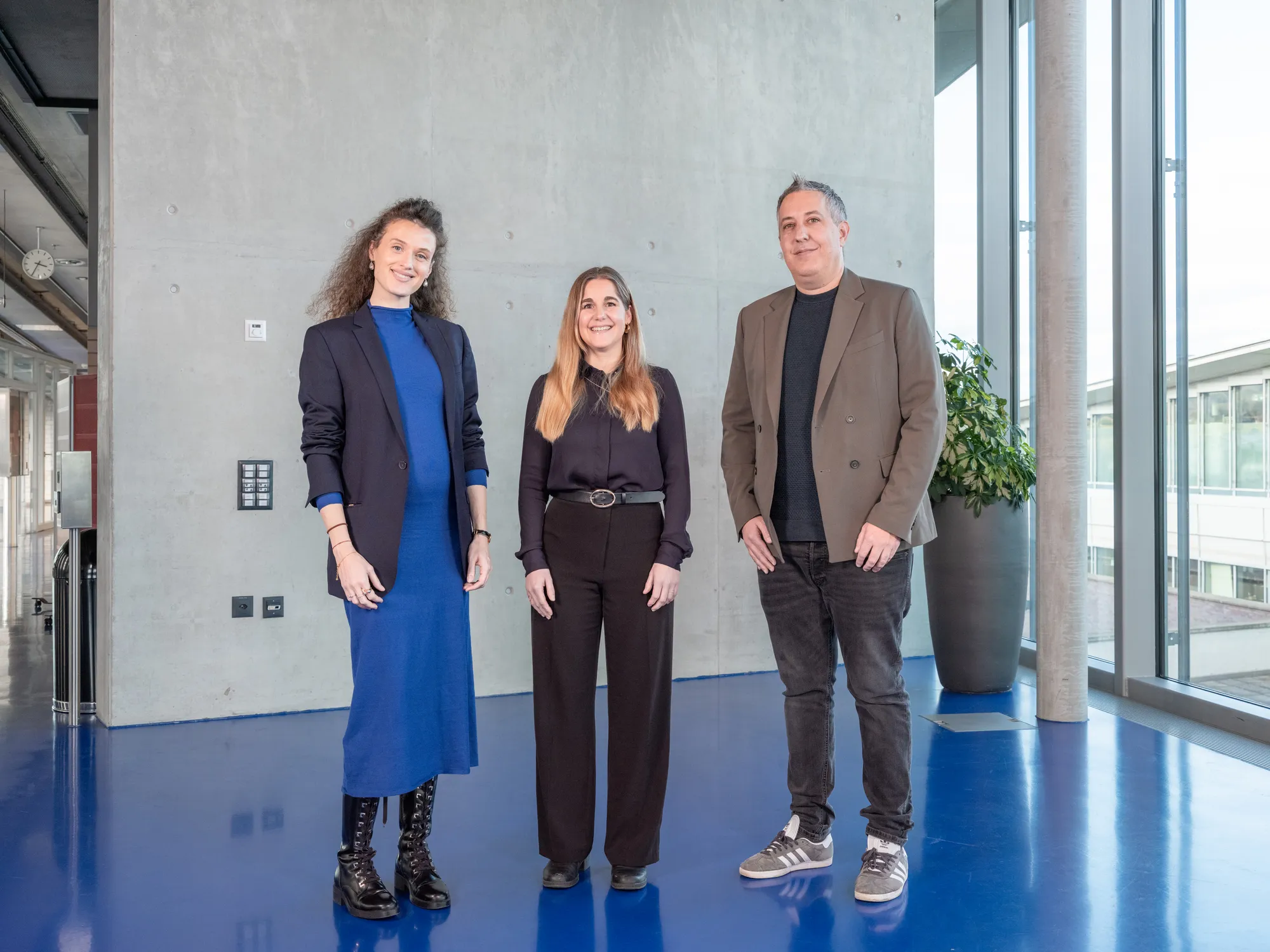
Die Gruppe Person-centered Healthcare and Health Communication der Schweizer Paraplegiker-Forschung

Werden Sie jetzt Mitglied und erhalten Sie im Ernstfall 250 000 Franken.

Mitglied werden

Spenden Sie jetzt und unterstützen Sie unsere Projekte zugunsten von Querschnittgelähmten.

Donate
Was this page helpful?