
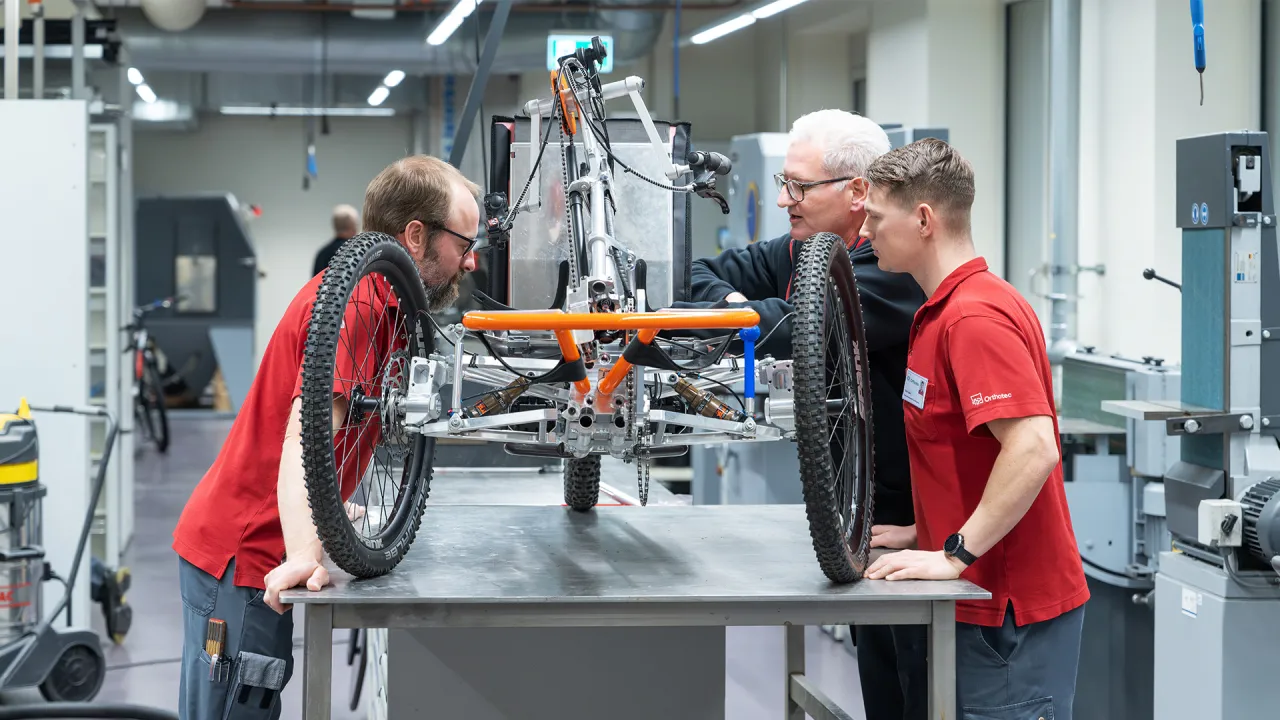
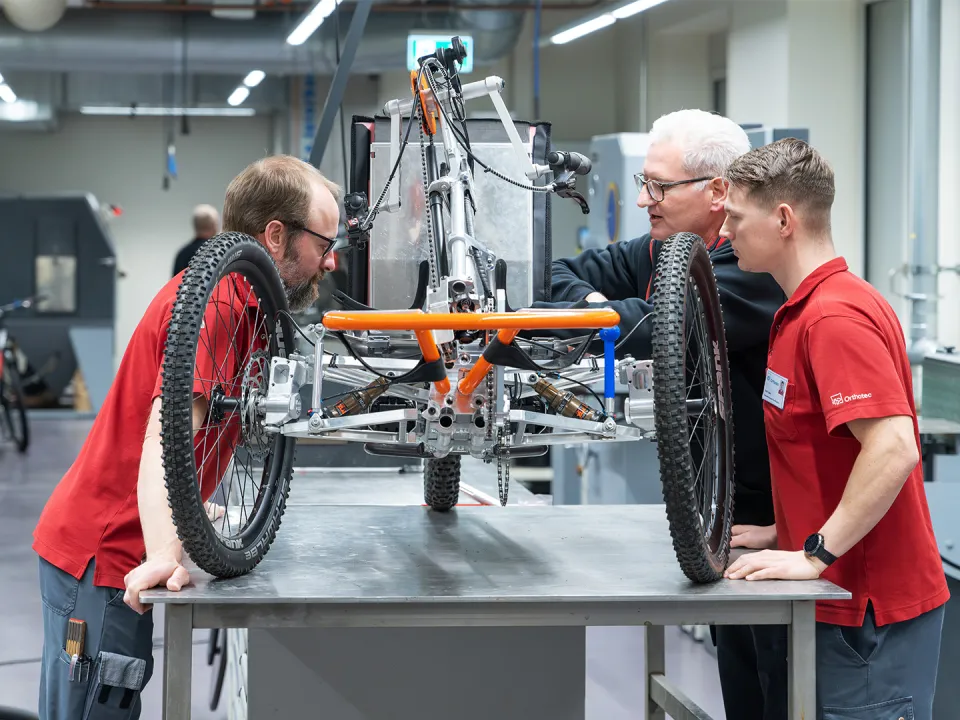
For this team of mechanics, work revolves around wheelchairs – from new deliveries and servicing to small adjustments. They find solutions, and the most important thing in the workshop is teamwork.
Text: Peter Birrer
Photos: Sabrina Kohler
Videos: Joel Najer | Astrid Zimmermann
Work is almost over and the weekend is just around the corner. And that also means it’s time to give the workshop a thorough clean. The men reach for large brooms, joke with each other – and the floor is clean in no time. In the meantime, Beat Pfister is carrying out a repair that was booked in at short notice and needs to be completed before the weekend. He quickly attaches an infusion holder to an electric wheelchair. The patient and his accompanying physiotherapist thank him.
45-year-old Beat is head of the Servicing & Repair department in wheelchair mechanics. He is supported by a couple of others at the same level in the hierarchy: Kevin Huber, who is in charge of the New and Sports Equipment department; and Kurt Galliker, an old hand in the field of special wheelchair construction.
800 new devices per year
So there are three bosses. But one thing is paramount in the department: teamwork. 14 employees take care of everything that is in any way related to wheelchairs. They have all changed careers, and have similar professional training. Motorcycle, bicycle, car and agricultural machinery mechanics, as well as a lorry driver, have dedicated themselves to this work at Orthotec. 800 new devices – including traction devices and sports equipment – are delivered every year, and each individual delivery involves time-consuming work. An inspection is needed that looks at the finest details and takes up to two hours: Is the client really getting what they ordered? Is the seating position right? Is every screw secure? What about the tipping point? Are the brakes working properly? Does the wheelchair run perfectly? In addition, a photo is taken of every wheelchair and a file is created.
Kevin Huber usually does this. The 34-year-old from Nottwil, who grew up near the campus, often sits at his desk to deal with administrative work. But he definitely enjoys hands-on work every now and then. The former motorcycle mechanic, who has trained in technical business administration, likes the contact with a variety of people. “Being able to help people fascinates me,” he says. “The gratitude we are shown is a beautiful form of appreciation.” In the past, he was surrounded by the sound of engines and the smell of petrol every day in the workshop. He does not miss it, because he has found something else that excites him. Time and again, he and his team are challenged to find new solutions – and they never do things by halves. “We always pay attention to what seem to be the smallest things,” says Kevin. “If we ignored them, it could potentially have very unpleasant consequences for customers and cause pressure sores.”
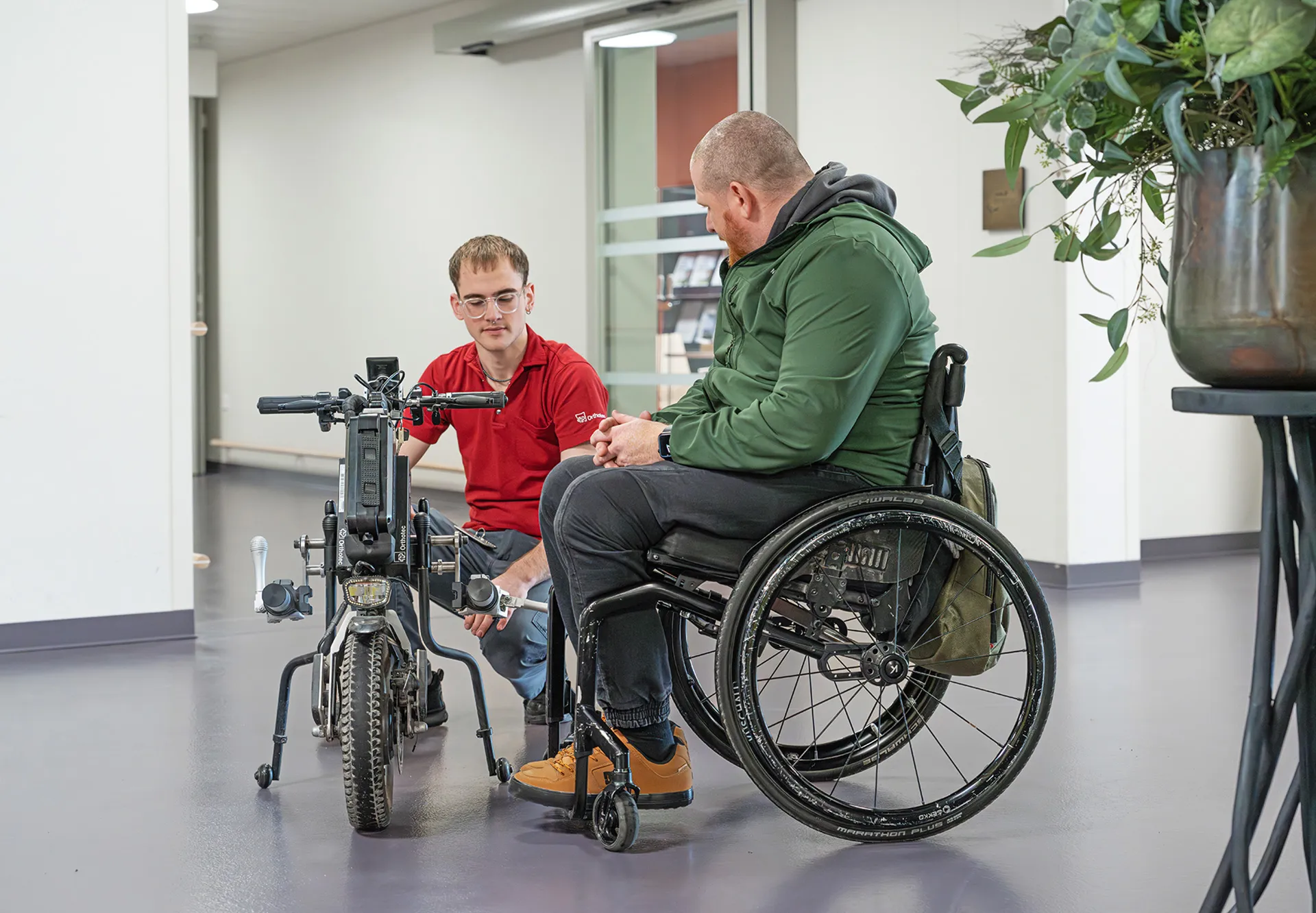
“The gratitude we are shown is a beautiful form of appreciation.”
"Sometimes we’re on pins and needles"
Mechanics often perform custom work under a certain amount of time pressure. They are aware that customers want their aids back again as soon as possible. On average, they spend around three hours servicing a manual wheelchair, while an electric wheelchair usually takes at least four hours. “Sometimes we are on pins and needles,” says Kevin.
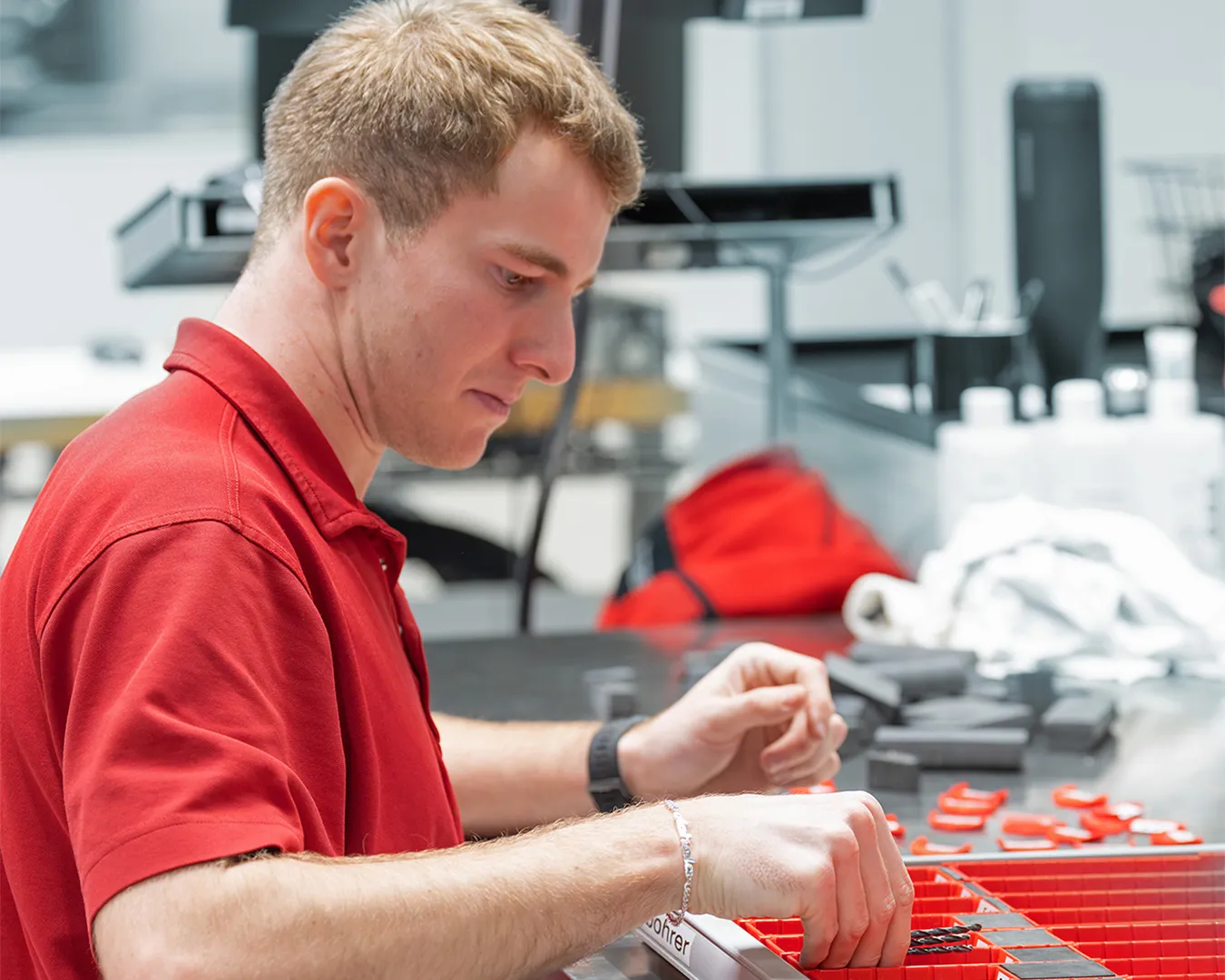
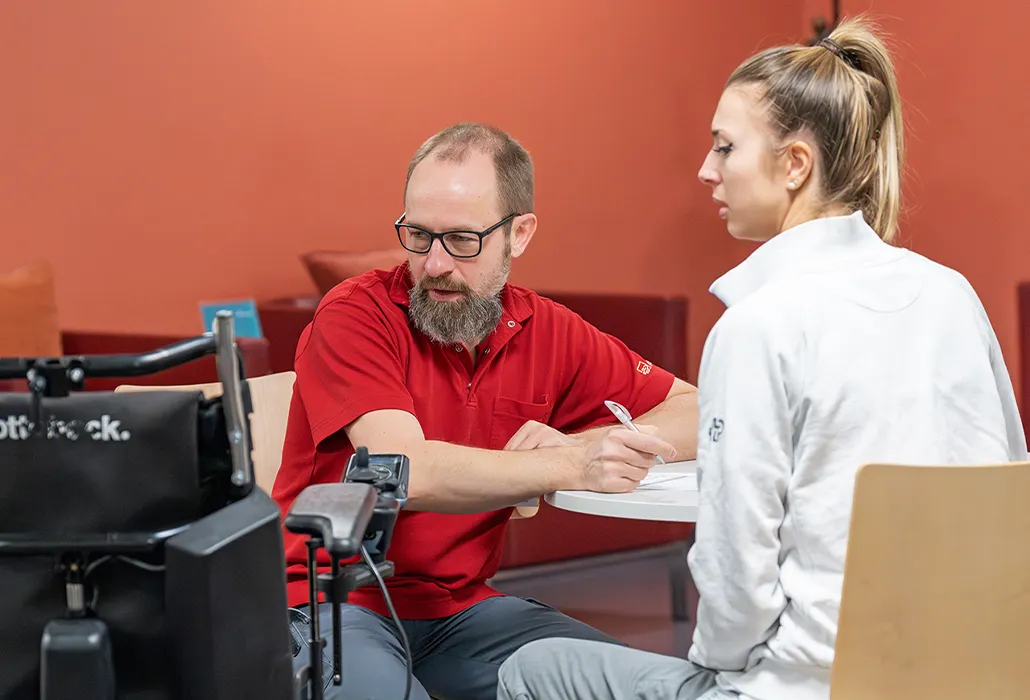
And then there are the in-house orders, which Beat Pfister accepts every morning between 7:30 am and 8 am. This is when the occupational therapists come to Orthotec and leave their requests, which mainly relate to individual settings for wheelchairs. Beat distributes the work to his colleagues and now knows exactly who is the right mechanic for each assignment. After that, they all get down to work at the individual workbenches. While everyone seems to be busy with their own work, as soon as anyone comes across anything tricky, he gets help. “Everyone supports each other,” says Kevin Huber, “that’s part of the special atmosphere that we have here.”
Effective coordination is needed in order to meet all of the deadlines. This is the responsibility of the five-person order processing team. The logistics department, which ensures that the individual parts are provided, is also an indispensable part of the process.
Old hand Galliker is lucky
In the field of wheelchair mechanics, there are also inventors at work; old hands like Kurt Galliker have been doing this work with great dedication for over 27 years. If you’re looking for him, you’ll often find him in the machinery room – where milling or grinding, welding or sandblasting are carried out. “We want our services to increase the independence of wheelchair users,” stresses the 58-year-old. “I am lucky to have been here for so long. We all work in a really cool place here.”
The workshop is now clean and the team say their goodbyes. Kevin Huber, Beat Pfister and Kurt Galliker go back to the office again, finish off their final tasks on the computer, and when they leave, they know that first thing on Monday morning, they will be ready for the next onslaught of requests.
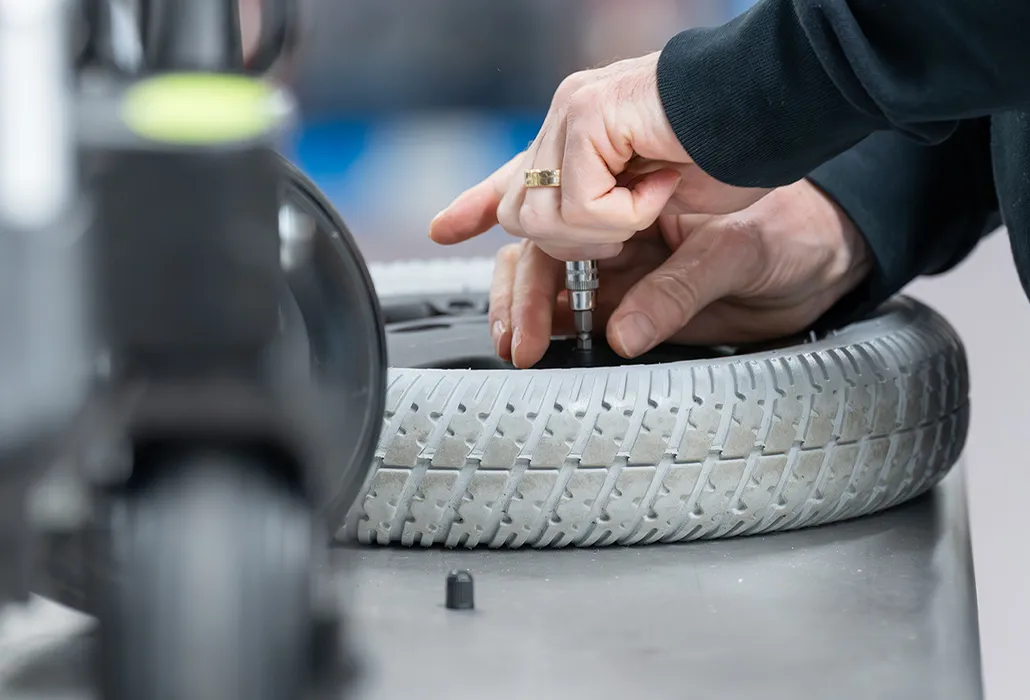
Precise craftsmanship: even what seem like the smallest things are important.
About the Swiss Paraplegic Group
The Swiss Paraplegic Group is one of the largest non-profit organisations in Switzerland. We support people with a spinal cord injury with a holistic and globally unique network of services – from the scene of the accident or in the event of an illness-related diagnosis and throughout their lives.
Work with over 2,000 specialists from over 100 professions and enable people with a spinal cord injury to lead a self-determined life.
Werden Sie jetzt Mitglied und erhalten Sie im Ernstfall 250 000 Franken.
Spenden Sie jetzt und unterstützen Sie unsere Projekte zugunsten von Querschnittgelähmten.