
Spasticity management
Spasticity can occur in the event of tetraplegia, after a brain injury (accident, cerebral infarction, cerebral haemorrhage) or due to various neurological conditions.
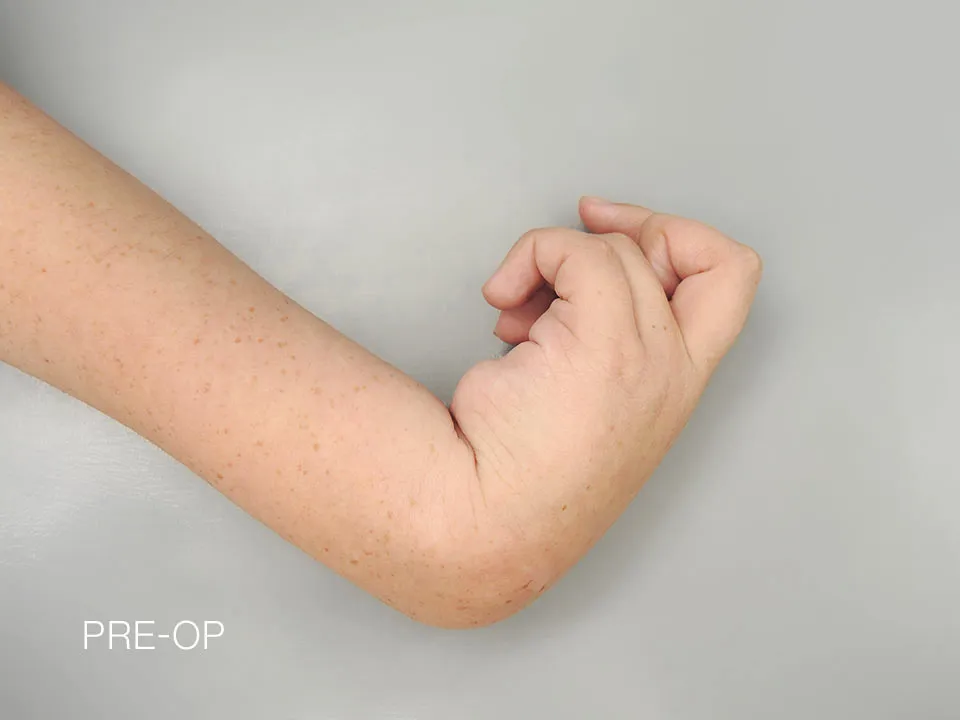
Spasticity is expressed in the form of increased muscle tone in various muscle groups. In the event of severe spasticity over a prolonged period, spastic misalignments may occur (e.g. bending misalignment of the elbow or wrist, closed fist position of the fingers).
Spasticity can significantly impair quality of life (pain, difficulties with everyday tasks such as dressing, personal hygiene, etc.).
If conservative measures such as physiotherapy, Botox injections, etc. no longer produce any improvement, surgical measures may be used.

How are operations performed?
Misalignments can be corrected using tendon extensions, reduction of nerve fibres (hyperselective neurectomy) and procedures on the joints. The individual surgical steps will be planned and adjusted individually for each person living with spinal cord injury.
What happens after the operation?
IFollowing the operation, splint treatment and hand therapy follow-up treatment will often be needed for an extended period (three months).
What are the chances of success?
Spastic misalignments can be permanently corrected via a surgical procedure and the subsequent hand therapy follow-up treatment.


Werden Sie jetzt Mitglied und erhalten Sie im Ernstfall 250 000 Franken.
Spenden Sie jetzt und unterstützen Sie unsere Projekte zugunsten von Querschnittgelähmten.