Lehre_Forschung
Lehre_Forschung

Teaching and research

The Swiss Paraplegic Centre is a teaching and research hospital

In order to improve the lives of people living with spinal cord injury in a lasting manner and develop new treatment approaches, the Swiss Paraplegic Centre (SPC) conducts intensive teaching and research work in the area of spinal cord injury.

The close collaboration with Swiss Paraplegic Research (SPR) and the Faculty of Health Sciences and Medicine at the University of Lucerne allows for a high academic level in these areas. Research is conducted in interdisciplinary research groups made up of doctors and scientists. All research projects at the SPC are coordinated with SPR.

Among other things, the SPC provides training for medical students as part of the “Joint Medical Master” programme in cooperation with the University of Lucerne and University of Zurich.

The Swiss Paraplegic Centre (SPC) is a teaching and research hospital and uses its varied, high-quality training and education opportunities to create an important bridge between science and practical experience.

The Nottwil Campus provides training for medical and health science students. The clinical teaching staff work closely with the University of Lucerne in order to ensure that the education offers sound teaching whilst also being practical. The teaching is based on an expertise-oriented curriculum that is closely coordinated with the Universities of Lucerne and Zurich.

In addition to teaching, the SPC supports the exploration and questioning of new research findings or treatment methods. Under specialist guidance, students and trainees are given the opportunity to formulate their own scientific questions with the aim of ensuring continuous improvement in the treatment of patients through well-founded critical analysis.

Joint Medical Master (JMM; BS and MS course)

Working with the Faculty of Health Sciences and Medicine of the University of Lucerne, the University of Zurich and various medical facilities in central Switzerland ensures high-quality, well-founded basic education for medical students. The education focuses on basic care for outpatients and inpatients. Cooperation with other healthcare professions is encouraged in order to ensure comprehensive and practical care for the patients.

Health sciences (BSc and MSc course)

During the course, students learn to understand health, well-being and the functional capabilities of the population on a holistic basis and from various perspectives. The main subjects include public health and epidemiology, health policy and economics, healthcare or health communication.

There is a particular focus on how to organise a sustainable and future-proof healthcare system. The students learn to recognise the health needs of the population and to develop solutions tailored to these needs.

When the course is finished, professional opportunities are available in public health institutions or in research.

Doctorates (Dr. med./D.sc.)

The Faculty of Health Sciences and Medicine offers a doctorate in medicine (Dr. med.). One supervisor is responsible for the scientific work. This person must either be one of the professors, lecturers or titular professors from the faculty, or they must have the right to award doctorates at the faculty.

The primary supervisor is responsible for the conferral of the D.Sc. (PhD). They must be one of the professors from the Faculty of Health Sciences and Medicine.

Training opportunities

The University of Lucerne offers continuous professional training, which allows specialists to expand their knowledge of medical care.

Academic opportunities SPC – University of Lucerne

Due to the close cooperation between the Swiss Paraplegic Centre and the Faculty of Health Sciences and Medicine of the University of Lucerne, employees of the Centre or partner institutions involved in teaching can gain or be awarded academic qualifications.

Information on the appointment of titular professors or qualifying as a university lecturer via the lecturer qualification process, as well as guidelines on gaining the qualification as a clinical lecturer, are available on the University of Lucerne website: Regulations – University of Lucerne (unilu.ch)

Clinical research plays a central role in the further development of new treatment approaches to improve quality of life for people with spinal cord injury. This focuses on many different aspects – from restoring motor functions to innovative pain therapies, through to modern diagnostics and effective rehabilitation.

All research projects at the Swiss Paraplegic Centre (SPC) are conducted in close coordination with Swiss Paraplegic Research (SPR). Doctors and scientists work together in interdisciplinary teams.

At the SPC, the clinical and scientific research focuses on six central subjects:

  1. Cardiometabolic and Respiratory Research
  2. Neuro-Musculoskeletal Functioning and Mobility
  3. Neuro-Urology
  4. Therapies Enhancing Ambulation (T-Cord)
  5. Digital Health Care
  6. Advanced Imaging

In addition, further significant scientific issues are addressed in close cooperation with SPR.

Contact

Joint Medical Master (JMM) Coordination
Heads of JMM

PD Dr. med. Inge Eriks Hoogland
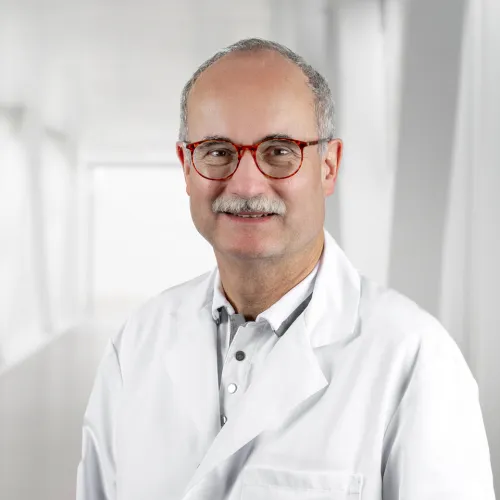
Dr. med. Michael Harder

Divisional Head & Contact person Clinical research
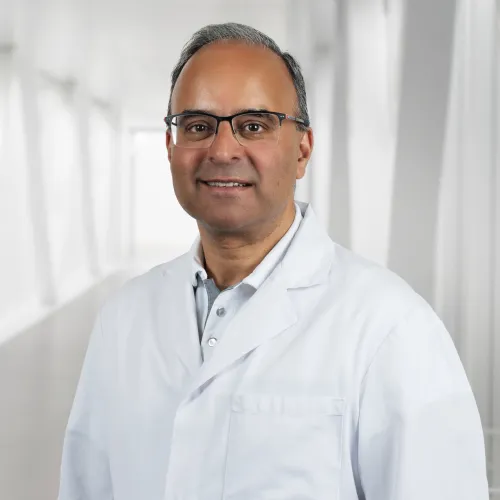
Prof. Dr. med. Rajeev Verma

Werden Sie jetzt Mitglied und erhalten Sie im Ernstfall 250 000 Franken.

Mitglied werden

Spenden Sie jetzt und unterstützen Sie unsere Projekte zugunsten von Querschnittgelähmten.

Donate
Was this page helpful?